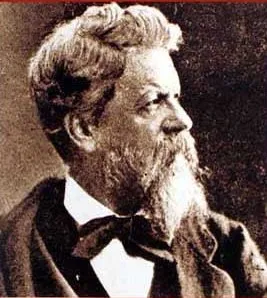
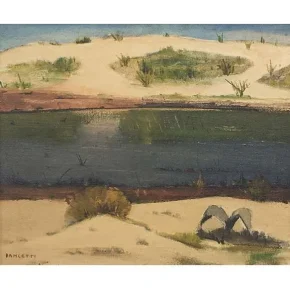
Nicola Antonio Facchinetti (1824–1900) was an Italian-born painter who became a prominent figure in 19th-century Brazilian art. After relocating to Rio de Janeiro in 1849, he initially worked as a scenographer and drawing instructor before dedicating himself to landscape painting. Facchinetti's works are celebrated for their meticulous detail and naturalistic portrayal of Brazil's diverse terrains, often annotated with precise information about the depicted locations. Notable pieces like "Enseada do Botafogo" (1869), housed in the São Paulo Museum of Art, and "Enseada de Paquetá com Serra dos Órgãos ao fundo," part of the Pinacoteca de São Paulo's collection, exemplify his commitment to capturing the interplay between urban development and natural landscapes. His contributions significantly enriched Brazil's visual heritage, offering invaluable insights into the country's 19th-century topography and urbanization.