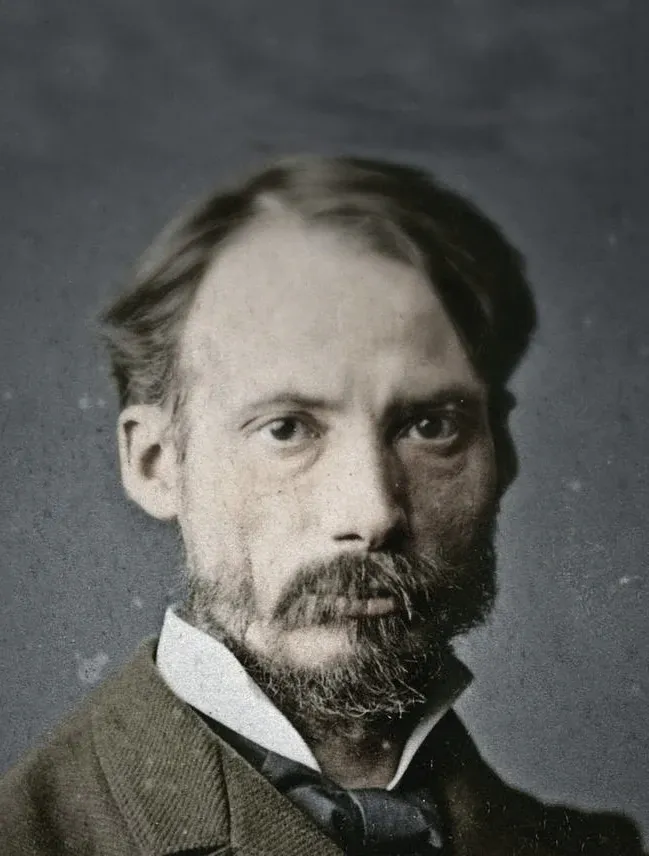
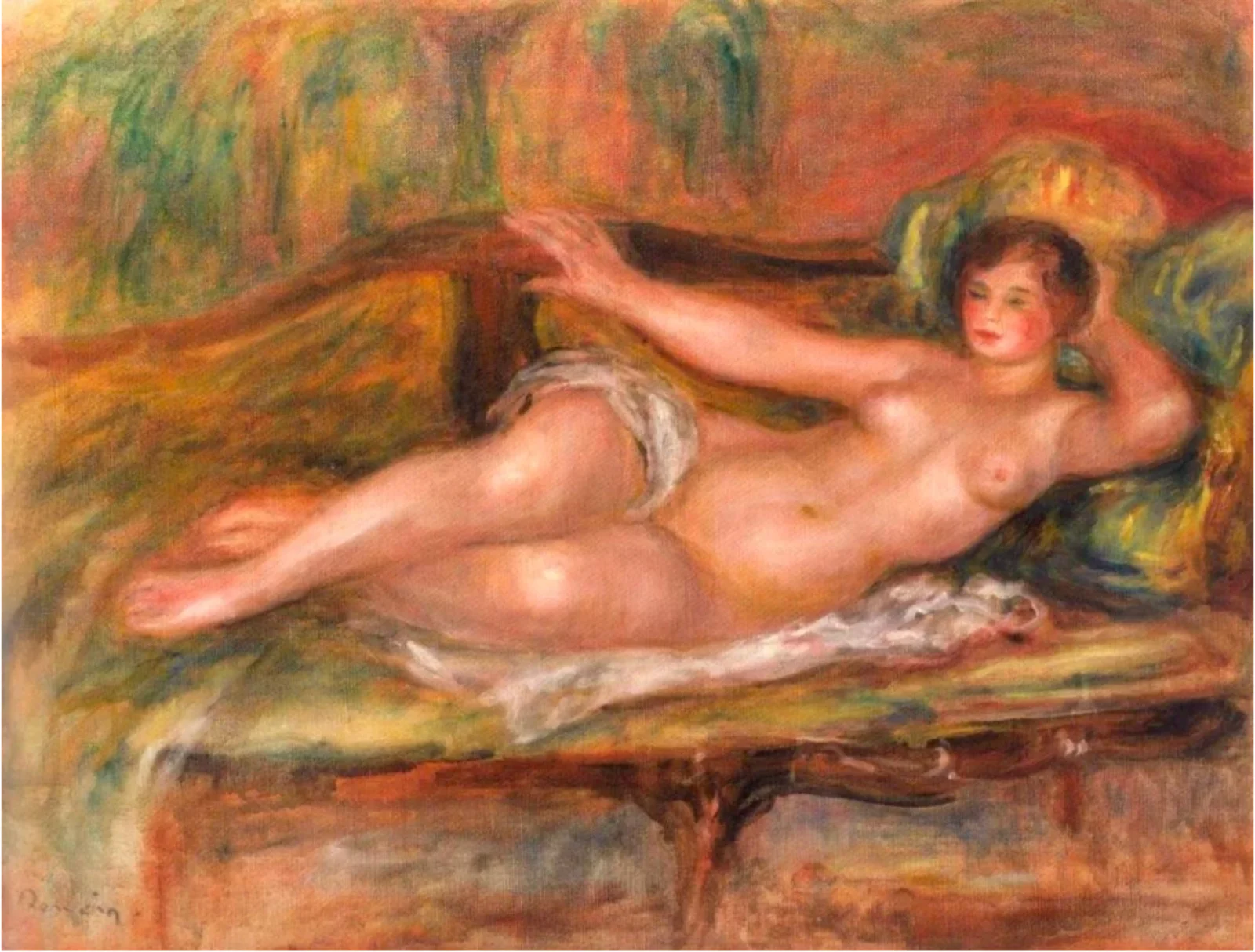
Pierre-Auguste Renoir (1841–1919) was a seminal French painter and a founding figure of the Impressionist movement. Born in Limoges and raised in Paris, he began his artistic journey as a porcelain painter, a trade that honed his sensitivity to color and surface. In the early 1860s, Renoir studied under Charles Gleyre, where he met fellow artists Claude Monet, Alfred Sisley, and Frédéric Bazille. Together, they pioneered plein air painting, capturing the fleeting effects of light and atmosphere. Renoir's early works, such as La Grenouillère (1869), exemplify the vibrant brushwork and luminous palette characteristic of Impressionism. By the mid-1880s, seeking a more structured approach, he turned to classical influences, emphasizing line and form in works like The Large Bathers (1887). Despite battling severe arthritis in his later years, Renoir continued to paint, often with a brush strapped to his hand, producing intimate portraits and sensual nudes that celebrate beauty and human warmth. His enduring legacy bridges the spontaneity of Impressionism with the discipline of classical art, influencing generations of artists to come.