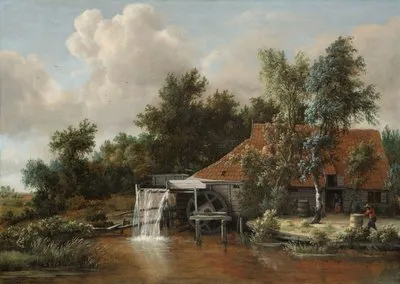
"Watermill", 1680
Oil on Cradled Panel | 73 x 106 cm
"Watermill" (1680) is a quintessential example of Hobbema’s mature style, combining technical finesse with lyrical composition. Painted in oil on a cradled wooden panel, the work presents a rural watermill nestled amid a verdant landscape—a subject the artist revisited frequently, turning it into one of his signature themes.
The interplay of soft, diffused light and intricate natural detail imbues the painting with a sense of quietude and timelessness. The subtle movement of water, the gentle curve of trees, and the rustic architecture invite the viewer into a contemplative space—an idealized vision of the Dutch countryside as both cultivated and enduring.
This work dates from the later period of Hobbema’s career, around the time he retired from painting to take a position as a wine-gauger in Amsterdam. As such, it reflects the culmination of his artistic language: one that elevates the everyday into the eternal through careful observation and painterly elegance.